Is The “Big One” Really Coming?
In what is being called one of the biggest earthquake swarms of the past decade, Mammoth Lakes, California, was hit by a barrage of over 700 quakes over four days. The magnitude of these quakes ranged from 1.0 to 3.9. Luckily, most of these quakes were micro-quakes, which are quakes that are too small to be felt. According to the United States Geological Survey (USGS), these quakes were simply brittle-failure or rock-breaking quakes. It usually takes a quake of at least magnitude 3.0 for people to become aware of the shaking. On the bright side, no quake-related damage has been reported, and towards the end of the four-day earthquake swarm, the intensity of the quakes began to lessen. That said, there are still a few questions that need to be answered in the wake of this swarm:
Could these earthquake swarms cause a volcanic eruption?
According to the USGS, no. Although the region in which the quakes have taken place – known as the Long Valley Caldera – was the site of a 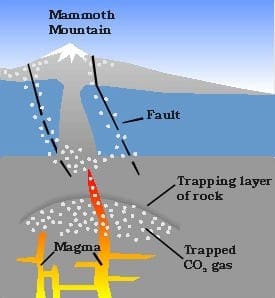 “super eruption” (over 760 thousand years ago), the quakes that have swarmed the area over the last number of days are not related to the underground movement of magma. Some people might be concerned about the chain of volcanoes surrounding the Long Valley Caldera; however, the USGS has stated that the quakes “pose no immediate hazard”.
What causes an earthquake swarm, specifically these most recent ones?
While many may think these earthquakes are caused by magmatic movement, this theory has been disproven by research conducted by the USGS. What is considered to be the cause of the recent swarm of earthquakes is tectonic stress. This means that water, carbon dioxide, or other gases are moving around underground and causing stress to the tectonic plates. The movement of tectonic plates is what causes earthquakes. As such, the more stress on the plates, the more earthquakes there are. The USGS is also closely tracking the quakes to better understand activity in the Long Valley Caldera region and to provide updates to those concerned.
How can I prepare for an earthquake swarm or worse: a mega quake?
While there is no evidence of a potential megaquake in the near future, it is still important to prepare. With any quake, there is the possibility that it could be of a high enough magnitude to cause damage to you, your family, and your property. Thankfully, this is something that you can protect yourself against. Having an earthquake preparedness kit is one of the most important things you can do if you live in an earthquake-prone area. Having enough food, water, and other supplies in the case of an emergency is key to survival in a potentially dangerous situation. There is even more you can do to get ready for an earthquake. Aside from your emergency kit, you should have a solid evacuation plan for you, your family, co-workers, and friends so that, no matter where you are when a quake hits, you will know what to do and where to go. In the event of a quake, remember to drop, cover, and hold on until the shaking stops. Finding a sturdy structure – a desk, for example – under which you can cover yourself will help to keep you safe in the event of an earthquake.
Another vital step to earthquake preparedness is getting your home seismically retrofitted. It all starts with a simple safety inspection. If needed, your home can be retrofitted to remain stable in the event of an earthquake. Weinstein Construction offers a free earthquake safety inspection to determine whether your home needs seismic retrofitting. Weinstein Construction has the expertise and tools to help you stabilize your home.
While the thought of an earthquake swarm is definitely scary, there is no need to fear if you simply prepare and remain calm. Keep up to date with the latest quake information by following the USGS, and make sure you get to work on that emergency kit, too. Also, remember to call Weinstein Construction today to get your home inspected.