Workplace Safety: Earthquakes in the Workplace
How to Avoid Danger in an Office Building
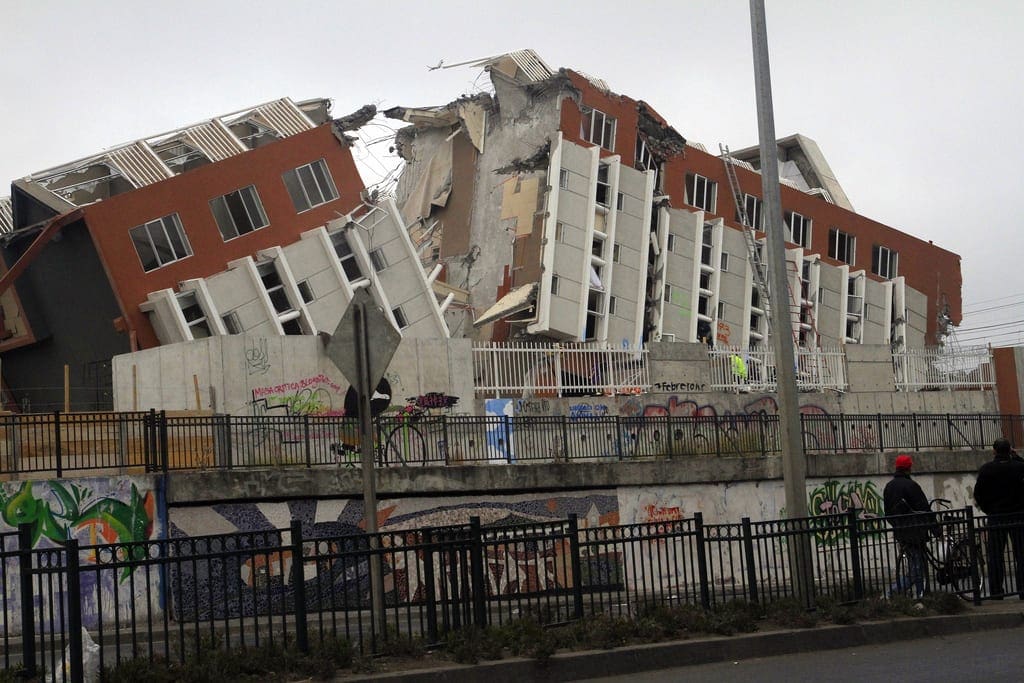
You’re back at the old grind on a Monday morning, doing your usual pencil-pushing, and waiting for the caffeine in your first cup of coffee of the day to kick in. Another day, another stack of paperwork, right? You yawn, stretch, and think about your lunch waiting in the communal fridge when all of a sudden, something seems off. There is a loud rumbling noise, and you wonder if it might be a plane flying low overhead. No, the building is actually swaying. Your wheelie chair is squeaking an awful lot, and the coffee in your mug is rippling like something out of a monster movie. You see a framed certificate on a nearby wall come crashing to the ground, glass shattering all over the floor. The floor is still shaking, and you wonder if your first-floor office might just get swallowed up into the ground, disaster movie-style. You look up from your cubicle and see that everyone else is looking around in confusion, wondering what the heck is going on! That’s right, it’s an earthquake, and now everyone is panicked. Well, everyone except for you. Why? Because you prepared ahead of time. Now it’s up to you to save the day and quell the Monday morning mega-quake madness amongst your co-workers.
For starters, when starting a new job or regularly occupying certain buildings, it is prudent to survey your surroundings to ensure they are structurally sound. Identifying exits and safe spaces to drop, cover, and hold on will come in handy in any future emergency. In an office, there are usually briefings and drills from management on evacuation and emergency procedures. They will point out exits and safe meeting places for post-emergency situations, should evacuation be required. If you pay attention, remain alert, and are aware of your surroundings, you will know what to do when the shaking starts, and you will also be able to convey to your co-workers what they should do to protect themselves. Drop, cover, and hold on underneath a sturdy desk or similar structure and alert your co-workers to do the same. Be sure to keep hold and wait for the shaking to stop. Once the shaking is over, cautiously emerge from underneath your desk and look around to see if anything has fallen or if there are obstacles that might block your exit path. The most important thing is to remain calm. If you can lead by example, you can help keep everyone around you calm and avoid any panic-related injuries or dangers. Remember, an office full of people running around and losing their heads in an emergency will only make things worse.

Another important part of emergency preparedness is to keep a disaster kit accessible. Your office should have one (remember to find out where it is), but you can also keep a small personal kit in your desk drawer or somewhere easily accessible. This kit should include water, non-perishable food, a flashlight with extra batteries, a change of clothes (sturdy shoes are very important!), and a hand-crank or battery-operated radio to tune in to announcements and updates from authorities.
In the aftermath of a quake, remember to prepare for an aftershock. Also, check for injuries and determine whether CPR or first aid is necessary. If you need to, alert the authorities. When it is safe to do so, you and your co-workers can carefully evacuate and rendezvous at your company’s agreed-upon emergency meeting place. Another important thing to remember is that you should NOT use elevators in an emergency. Stairs are always the best choice. When outside, avoid downed power lines and objects touching them to protect yourself from electrocution. Again, the best advice is to remain calm and help others around you do the same. By avoiding danger and keeping a cool head, you can ensure that you and your co-workers will stay safe and have an interesting story to share around the water cooler next week!
About Weinstein Construction
Weinstein Construction has protected Southern California homes and commercial buildings since 1977, bringing nearly 50 years of specialized experience in foundation repair, house bolting, and earthquake retrofitting. Our team has completed more than 80,000 inspections and over 8,000 retrofit and foundation projects across Los Angeles and the surrounding region, delivering engineering-grade solutions built to meet California’s seismic standards. Every recommendation we make is grounded in decades of hands-on field experience and a commitment to doing the job right the first time. Learn more about our team or reach out anytime with questions about your foundation or earthquake preparedness.